When your best salesperson retires, what walks out the door?
Your ERP has the data. Your best rep has the knowledge.
In their head
- Price exceptionOnly they know
- SubstituteOnly they know
- Reorder timingOnly they know
- Key contactOnly they know
It works while that one person is here to answer.
In your system
- Price exceptionRule and reason
- SubstituteApproved list
- Reorder timingSaved list
- Key contactBuyer role
It still works after they leave, because the next person can read it.
It is Monday morning. The phone rings. The buyer does not ask for the sales desk. They ask for your best rep by name.
That rep knows the account. They know what this buyer orders, and when the next job starts. They know the price that is not on the list, and why it was given. If the first item is out, they know what this customer will take instead, and what they will send back.
Your team already knows who to call when the question is hard. So does the customer.
That is a strength. It is also a risk. The strength sits in one person’s head. A retirement, a new job, or a long absence does not pause the accounts. The orders still come. The person who knew how to handle them may not.
What they know that no system holds
Your systems hold a lot. They hold orders, invoices, items, and prices. Your best rep holds something else. They hold the way the account actually works.
Customer habits. Some buyers order in the first week of the month. Some go quiet, then place one large order before a job. Some need a call before that order, so the quantity is right and the truck is not a surprise. The ERP can show the last invoice. It does not show the habit. It does not say to call them before they send the list.
Pricing exceptions, and the reason. This account pays a price that is not the book price. There was a reason. A job. A promise. A match on one line, not on the whole catalog. The price may be stored. The reason often is not. The next person sees a number. They do not know if they should keep it, extend it, or stop it.
Preferred substitutes. When one item is out, this customer will take another. A different customer will not. They would rather wait than switch brands. Your rep learned that on the phone. A single substitute for the whole company does not capture it. The right swap depends on the account.
Key relationships. The name on the account is not always the person who decides. One person places the order. Another approves it. A third person will complain if the brand changes. Your rep knows who to call, and who not to bother. A contact marked only as “buyer” does not tell you that.
None of this is a secret formula. It is the ordinary knowledge of a good salesperson. The trouble is that it lives in one place.
The week after they leave
They retire, or they leave, and the accounts are still yours. The knowledge is not.
A reorder does not show up. The buyer was used to a call before the big order. Nobody made it. They assume you forgot them. The order goes somewhere else, or it arrives late and sharp.
A new rep quotes the list price. The customer says, “That is not our price.” The exception was real. The reason was never written down. Now you look like you do not know your own deal. Trust dips on a call that should have been routine.
A substitute goes out. The customer rejects it. “We do not take that brand.” Your old rep would not have sent it. The new person had no list that said so. You pay for the return, and you pay again in the relationship.
A buyer calls and gets someone new. The new person is polite. They do not know the job, the standing order, or who signs off. The buyer feels like a stranger at a company they have bought from for years.
New reps learn by mistakes. Each mistake is a customer teaching your company something the last rep already knew. You have lived a smaller version of this when that person was on vacation. The difference is that a vacation ends.
Storing data is not the same as capturing knowledge
Your ERP is full of data. Data is a record of what happened.
An order was placed. A price was used. A SKU shipped. A name sits on the account. Those facts matter. They are not the same as knowing what to do next.
Knowledge is the why, and the next step.
This account gets this price because you agreed it for one kind of work, and it was not meant for every item they buy.
When X is out, send Y to this customer. Do not send Y to the other one. They will wait.
Call this person before you quote. They decide. The name on the account is the person who types the order, not the person who approves it.
An ERP is built to store the first kind of fact. It is good at that. It rarely asks for the second. There is a field for a price. There is often no field for why the price exists. There is a field for a contact. There is often no field for what that person actually decides.
You can export every order they entered. You still will not have the reason, the swap, or the name of the person who has to say yes. The system stored the result. The rep kept the judgment.
How to capture it while they are still there
You do not fix this with a speech at a retirement party. You fix it by giving the knowledge a home that is not one person’s memory. This is an approach. It can live in the systems you already run. The name of the tool matters less than what you choose to store.
Put the price and the reason in the same place. A contract price without a reason is a number the next person is afraid to touch. Store why it exists, what it covers, and when someone should look at it again. Then they can keep the deal, narrow it, or end it, without a guess. If you want the plain version of how those prices reach the buyer, the guide on contract pricing is a good next read.
Write the substitutes down, by customer or by item. Not one swap for everyone. The list this account will accept, and the list they will not. The rep should not be the only copy. The person who fills an out of stock line should see it before the truck is loaded.
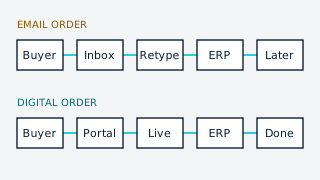
Save the reorder, and the note about when to call. A reorder list is the order they place again and again. A short note can say, “Call before the spring job,” or “They order in the first week.” Put that where the account team and the buyer can both see it, on the page they use to buy. The habit is no longer a call only one person remembers to make. Orders that still start in email make this harder, because the story sits in a mailbox. The guide on the hidden cost of email orders is about that path.
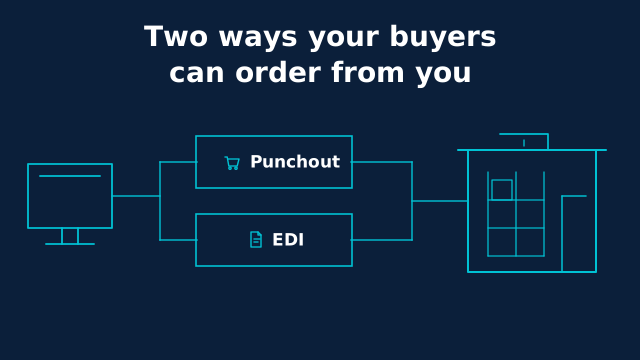
Record who does what at the account. Who places the order. Who approves it. Who to call when the brand or the pack size changes. A large account may send the order from their own system, by punchout or by EDI. The guide on punchout and EDI explains those two paths. The point here is smaller. Write the relationship down. Do not leave “who really decides” in one rep’s head.
Make handover a habit while they are still in the building. Do not wait for the last week. Each week, take a few accounts from memory and put them in the system. The rep is still there to say, “No, that price was only for the one job,” or, “They will not take that substitute.” Correction is cheap when they are at the next desk. It is expensive when they are gone.
None of this replaces the rep. It keeps what they know available to the next person, and to the buyer.
A practical way to start
You do not have to capture every account this month. Start with the ones that would hurt if that rep were out tomorrow.
- Sit with your top rep for an hour a week. Do not ask for a presentation. Ask them to open one account and say what is special about it.
- List their top 20 accounts. For each one, write the habit, the price exception and the reason, the substitute they trust, and the person who really decides.
- Put the price and the reason where the next quote will see them.
- Put the substitute where the person handling an out of stock line will see it before anything ships.
- Save the reorder list, and the note about when to call, where the account team can read it.
- Name a backup for each of those accounts while the rep is still there to introduce them.
Leave a blank where you are not sure. A blank is more honest than a guess, and it shows you what to ask next week.
If this is the rep everyone calls, you already know the stakes. You do not need a study. You need the knowledge out of one head and into a place the rest of the company can use.
When you want to talk through how to hold that in the systems you already run, book a call.